Newsletter Subscribe
Enter your email address below and subscribe to our newsletter
Enter your email address below and subscribe to our newsletter

 ByJohn A
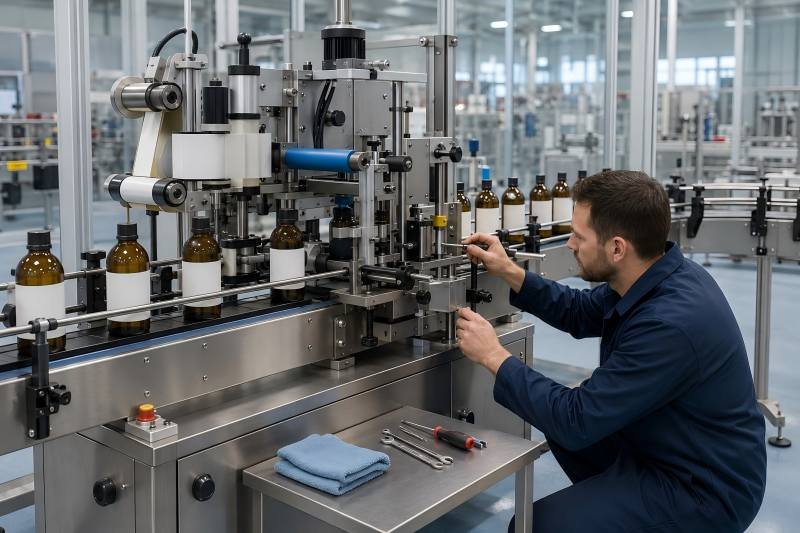
Business growth rarely happens overnight. It is usually the result of continuous improvements made across production, packaging, logistics, and quality management. As manufacturers expand into new markets and introduce larger product portfolios, every stage of the production line must be capable of handling increased demand without sacrificing consistency. One area that often determines whether a company can scale successfully is its packaging operation. A bottle labeling machine has become an important part of scalable manufacturing because it supports accurate labeling, smoother workflows, and greater operational flexibility as production volumes continue to grow.
Scalability is no longer a concern only for multinational manufacturers. Small and medium-sized businesses are also preparing for future expansion by investing in equipment that can grow alongside their operations. Instead of replacing machinery every few years, companies are looking for solutions that remain efficient as production requirements become more complex.
Packaging technology has therefore shifted from being a production necessity to becoming a long-term business investment. Manufacturers now evaluate labeling systems based on their ability to support sustainable growth rather than simply increasing daily output.
Scalable manufacturing refers to a production system that can handle increasing demand without requiring major operational changes. As businesses receive larger orders or launch additional product lines, production processes should be able to adapt without creating unnecessary delays or rising operational costs.
Building scalability requires careful planning across every production stage. Raw material management, production scheduling, packaging, warehousing, and distribution must work together efficiently. When one process cannot keep pace with the others, it often becomes a bottleneck that limits overall productivity.
This is why manufacturers increasingly design production systems that allow future expansion instead of focusing only on current requirements.
Many businesses focus primarily on manufacturing capacity when planning expansion. However, packaging often determines how efficiently products move through the final stages of production.
An organized packaging process helps reduce delays, improve inventory flow, and maintain consistent product presentation. These advantages become increasingly valuable as production volumes increase.
When packaging systems remain reliable, businesses can introduce new products, respond to seasonal demand, and manage larger customer orders without creating unnecessary operational pressure.
Today’s manufacturers rarely produce a single product. Beverage companies launch new flavors, cosmetic brands release limited collections, and pharmaceutical manufacturers package products in different sizes for various markets.
Managing multiple packaging formats requires production systems capable of adapting quickly between different bottle shapes, label dimensions, and packaging specifications.
Efficient production depends not only on speed but also on the ability to handle variation without disrupting workflow.
Flexible packaging operations make product diversification much easier as businesses continue expanding.
Downtime represents one of the largest hidden costs in manufacturing.
Every interruption affects production schedules, employee productivity, equipment utilization, and delivery commitments. Manufacturers therefore place significant importance on minimizing unnecessary production stops.
Well-organized packaging systems contribute by supporting smoother transitions between production runs and reducing the need for repeated adjustments.
Lower downtime creates more predictable production planning and improves overall operational performance.
Brand consistency becomes increasingly important as businesses enter new regional or international markets.
Customers expect products purchased from different stores or distribution channels to maintain the same professional appearance. Consistent packaging strengthens customer confidence while supporting long-term brand recognition.
Reliable labeling contributes to this consistency by ensuring that products maintain a uniform presentation across every production batch.
This consistency becomes especially valuable when businesses distribute products through supermarkets, wholesalers, and export partners.
See also: Finding Graphic Designers for Hire on a Deadline
Production speed is only one measure of operational performance.
Modern manufacturers also evaluate equipment based on reliability, maintenance requirements, adaptability, and long-term operating costs.
An efficient production system should support continuous operation while minimizing material waste, reducing manual intervention, and improving workflow coordination.
These factors often have a greater impact on long-term profitability than production speed alone.
Expanding into new markets introduces additional operational requirements.
Businesses may need to produce different packaging formats, comply with regional labeling standards, or adjust production schedules to meet changing customer demands.
Companies with flexible production systems can respond more efficiently because their packaging operations are already designed to support variation.
Preparation for expansion therefore begins long before products enter new markets.
Digital technologies continue changing how manufacturing facilities operate.
Production monitoring, automated reporting, and predictive maintenance allow manufacturers to improve operational visibility while reducing unexpected interruptions.
Access to accurate production data helps management teams identify opportunities for process improvement and make informed investment decisions.
Technology is no longer viewed simply as equipment. It has become an important source of operational intelligence.
Successful manufacturers consider the total cost of ownership rather than focusing only on initial equipment investment.
Reliable production systems often reduce maintenance expenses, material waste, labor requirements, and operational disruptions over many years.
Although efficiency improvements may appear small individually, their combined impact can significantly improve long-term profitability.
This broader financial perspective influences how businesses evaluate packaging technologies today.
Manufacturing continues evolving through automation, digital integration, and changing customer expectations.
Businesses that build adaptable production environments are better prepared for future opportunities because they can introduce new products, expand capacity, and improve operational efficiency without major structural changes.
Future-ready facilities emphasize flexibility, quality management, sustainability, and continuous improvement rather than short-term production gains.
These characteristics help manufacturers remain competitive as market conditions continue changing.
Scalable manufacturing depends on much more than increasing production capacity. Businesses must create efficient systems that maintain quality, reduce operational complexity, and support future expansion without compromising consistency. Packaging plays an important role in achieving these objectives because it connects production with distribution, retail presentation, and customer experience.
As manufacturers continue preparing for long-term growth, the bottle labeling machine remains an important technology within scalable packaging systems. Its contribution extends beyond label application by supporting operational efficiency, production flexibility, consistent branding, and sustainable business development in an increasingly competitive manufacturing landscape.