Newsletter Subscribe
Enter your email address below and subscribe to our newsletter
Enter your email address below and subscribe to our newsletter

 ByJohn A
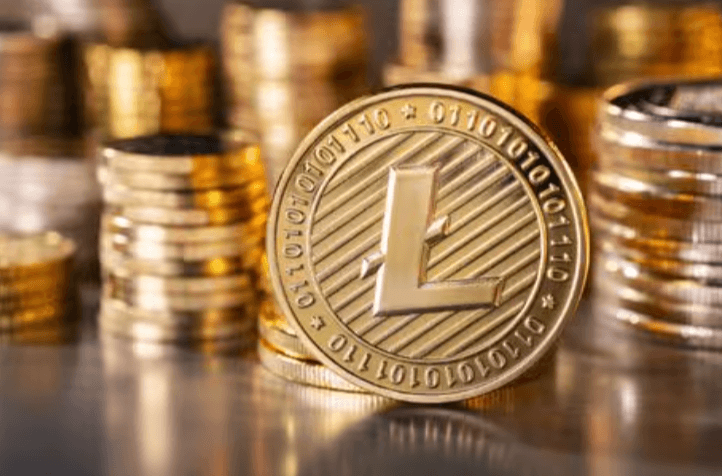
Litecoin is a peer-to-peer cryptocurrency designed to improve on Bitcoin’s weaknesses, offering faster block times and lower fees. It uses a scrypt-based proof-of-work algorithm and a larger supply cap of 84 million coins. The project aims for near real-time settlements and practical everyday use, while maintaining secure value transfer within a global, open financial system. Its faster confirmations and smaller costs invite closer scrutiny of whether these claims hold in practice, and what that means for users.
Litecoin is a peer-to-peer cryptocurrency designed as a faster, lighter alternative to Bitcoin. The coin emphasizes lower transaction costs and quicker block times, enabling near real-time settlement for everyday use. Litecoin differences include scrypt-based mining and a longer-established 84 million supply cap.
Bitcoin comparison shows similar protocol goals but slower transactions and higher fees in peak demand.
How does Litecoin achieve faster, cheaper transactions without sacrificing security? Litecoin uses Scrypt-based proof-of-work, shorter block times, and a robust network with a larger supply cap, balancing speed and reliability. It employs deterministic mining difficulty, lightweight transaction verification, and efficient wallet integration. The system favors scalability and low fees, appealing to users seeking freedom through accessible, rapid transfers. Two word ideas, unrelated to other sections.
See also: abdellatifturf
In real-world use, Litecoin serves practical roles across payments, remittances, and merchant adoption, driven by fast confirmations and low fees that reduce friction for small-value transactions.
The protocol supports crypto mining incentives and stable settlement, enabling merchants to accept crypto with minimal risk.
Its social impact includes financial inclusion and faster cross-border transfers, sustaining freedom of transaction without intermediaries.
Getting Litecoin involves a straightforward sequence: acquiring funds, choosing a secure storage method, and implementing safeguards to protect assets. The process emphasizes buying basics, selecting reputable exchanges, and verifying wallet compatibility.
Users should ensure storage security through hardware wallets or trusted cold storage, enable two-factor authentication, and regularly update software. Clear decisions reduce risk while preserving freedom to transact with Litecoin.
Litecoin offers a practical, faster alternative to Bitcoin, built for everyday use yet anchored in the same secure, decentralized ethos. In a crowded digital marketplace, its faster block times and lower fees act like a quick-ship option beside a conventional freight train. Consider a merchant who once faced delayed payments; with Litecoin, funds settle in minutes instead of hours, enabling smoother cash flow. For users seeking reliable, accessible digital value transfer, Litecoin remains a compelling option.