Newsletter Subscribe
Enter your email address below and subscribe to our newsletter
Enter your email address below and subscribe to our newsletter

 ByJohn A
Electronic products are increasingly designed as complete physical systems rather than as separate mechanical and electrical assemblies. A device’s enclosure, internal components, sensors, battery, thermal structure, and circuit layout all compete for the same limited space. When those elements are planned independently, the final product can become difficult to assemble or unnecessarily large. This has encouraged engineers to look for circuit architectures that can participate more naturally in the physical design of a device.
Rigid circuit boards remain highly effective for many applications, particularly where components need a stable platform and the available space is relatively straightforward. But modern products often contain curved surfaces, narrow sections, moving parts, and components distributed across different locations. In such environments, the physical shape of the circuit can influence the entire product architecture.
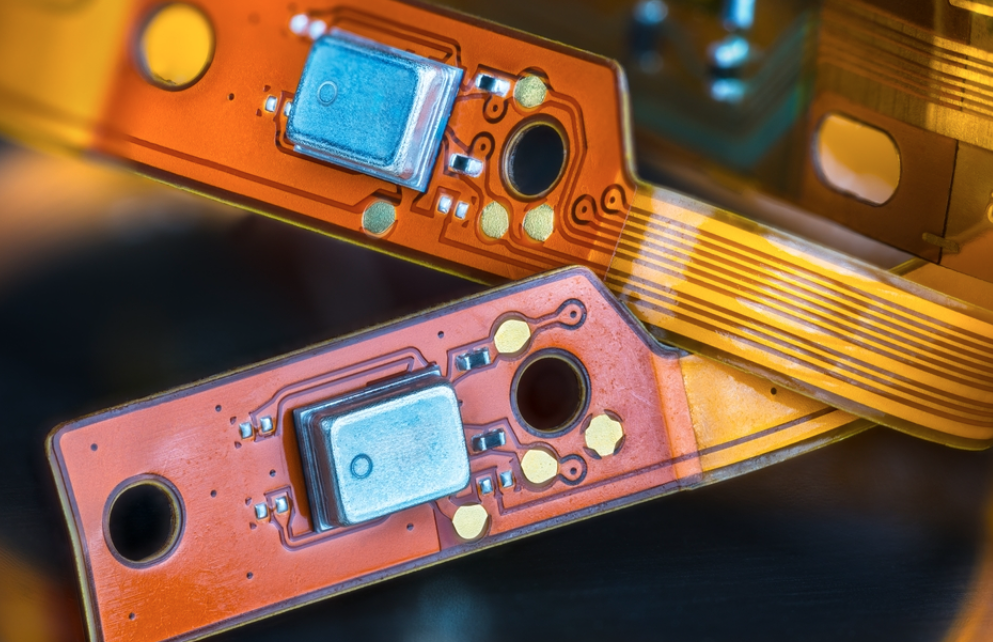
This is where flexible PCB manufacture becomes particularly relevant. Flexible circuits allow electrical pathways to occupy space in ways that rigid boards cannot always achieve. Instead of treating the circuit as a fixed platform that must simply fit inside the enclosure, engineers can consider it as part of the product’s physical structure, creating a closer connection between mechanical design and electronic architecture.
Traditional product development often separates mechanical and electrical decisions. Mechanical engineers establish the enclosure and available space, while electrical engineers determine how components should be connected within those boundaries.
As devices become smaller and more complex, that separation becomes harder to maintain.
A decision about the position of a battery can affect the circuit layout. The shape of an enclosure can determine where traces need to travel. A moving component can influence how a connection needs to bend.
Flexible circuit technology provides another option for coordinating these decisions earlier in the design process.
See also: Why Pedestrian Crossing Design Plays a Critical Role in Creating Safer and More Walkable Cities
Every component inside a compact electronic product competes for physical space.
Batteries may occupy a significant portion of the enclosure, while displays, cameras, processors, speakers, antennas, and sensors each require specific positions. Traditional wiring can also consume space through cables and connectors.
A flexible circuit can help organize these connections within the same limited environment. Its ability to follow selected paths means that electrical routing does not always have to occupy a large flat area.
This can make internal space more adaptable without requiring every component to become smaller.
Mechanical components often create obstacles for traditional circuit layouts.
A hinge, support frame, battery, motor, or curved enclosure section may divide available space into separate areas. With a rigid board, designers might need cables or additional connectors to bridge those areas.
A flexible circuit can sometimes travel around or between these structures.
This creates a direct relationship between the mechanical arrangement and the electrical pathway. Instead of treating obstacles as problems that must be worked around later, engineers can account for them while defining the circuit’s geometry.
A flexible circuit does not simply have to sit inside a product.
In some designs, it can follow the shape of the enclosure or occupy a specific section of the product where a rigid board would be impractical. This can make the circuit more closely integrated with the overall physical architecture.
Such integration can be useful when designing products that have curved, narrow, or distributed internal spaces.
The circuit becomes one layer of the product rather than an isolated component hidden inside it.
A completely flexible circuit is not always necessary.
Many products can benefit from combining rigid sections with flexible connections. Rigid areas can provide stable mounting locations for components, while flexible sections can connect those areas through curved or constrained spaces.
This type of architecture can provide a useful balance between structural stability and routing freedom.
It also allows engineers to apply flexibility only where it solves a specific physical problem.
Foldable devices provide a clear example of mechanical and electrical design becoming closely connected.
When two sections of a device repeatedly move relative to each other, their electrical connection must accommodate that movement without compromising performance.
A flexible circuit can be designed to act as a controlled connection between the sections. However, repeated movement introduces mechanical stress, so the circuit must be designed around an appropriate bend radius and expected cycle count.
The mechanical behavior of the circuit therefore becomes part of the electrical system’s reliability considerations.
Modern electronics increasingly depend on sensors positioned throughout a device rather than grouped around one central board.
A temperature sensor, motion sensor, camera, or other component may need to occupy a particular physical location because of what it is measuring.
Flexible connections can make it easier to connect these distributed components to processing electronics without requiring every sensor to sit directly beside the main circuit board.
This gives product designers greater freedom when determining component placement.
Wearable electronics are particularly dependent on the relationship between mechanical form and circuit design.
The product needs to remain comfortable against the body while containing batteries, sensors, processing hardware, and communication components.
The shape of the wearable can therefore influence the circuit architecture from the beginning.
Flexible circuits can help accommodate curved surfaces and movement, but the complete design still needs to account for comfort, heat, weight, durability, and expected use.
Vehicles contain electronic systems in areas that are often difficult to design around.
Dashboards, doors, seats, lighting systems, control panels, and sensor locations can contain irregular spaces and moving sections. At the same time, automotive electronics may encounter vibration, temperature changes, and long operating periods.
Flexible circuit architecture can help with spatial routing in these environments, but reliability requirements remain critical.
The physical adaptability of a circuit has to be matched with the environmental demands of the vehicle.
Medical equipment can also require close cooperation between mechanical and electrical design.
Portable devices need to remain compact and easy to handle, while wearable monitoring equipment may need to follow the contours of the body.
A flexible circuit can provide routing options that support these physical requirements.
However, medical applications also require careful consideration of reliability, materials, manufacturing consistency, and the specific requirements of the device.
Circuit geometry cannot be separated completely from how the circuit will be produced.
Material selection, layer construction, trace design, component attachment, protective structures, and bend areas all influence the finished product.
For this reason, flexible PCB manufacture needs to be considered during the architecture stage rather than after the product design has already been finalized.
A circuit that looks suitable in a digital model may still require changes when manufacturing tolerances, assembly methods, and mechanical stresses are taken into account.
Flexibility is useful only when it works alongside the required electrical performance.
Signal integrity, current requirements, power distribution, thermal behavior, and component connections remain fundamental considerations.
A flexible circuit cannot simply be designed around a shape without checking whether the resulting electrical architecture meets the application’s requirements.
The strongest designs balance physical adaptability with electrical reliability.
Compact electronics generate heat even when their physical layouts become smaller.
When components are distributed across a product, thermal management can become more complicated. Batteries, processors, wireless components, and other heat-producing elements may occupy different locations.
Flexible circuit structures can help with routing, but they do not eliminate the need for careful thermal planning.
Mechanical and electrical teams may therefore need to consider heat paths alongside circuit placement from the beginning.
A circuit may fit perfectly inside a product but still be difficult to assemble.
Manufacturers need access to connection points, components, and other critical areas during production. Flexible sections need to be positioned so they can be handled without unnecessary stress.
This means assembly requirements should be considered alongside the circuit’s final geometry.
A good design is not simply one that fits. It also needs to be practical to manufacture and assemble consistently.
Flexible circuits have mechanical limits.
Bend radius, repeated movement, component placement, material properties, and environmental conditions all influence how a circuit should be designed.
Engineers therefore need to determine where flexibility is actually needed and where rigidity provides a better solution.
The most efficient architecture may use flexible sections selectively rather than making every part of the circuit adaptable.
Once electrical pathways become more adaptable, industrial designers gain additional freedom.
A product can potentially use curved surfaces, distributed components, or unusual internal arrangements without being constrained entirely by one rigid circuit shape.
This can influence the external form of a product as well as its internal organization.
The relationship works both ways: product geometry affects circuit design, while circuit flexibility can create new possibilities for product geometry.
The continued growth of compact sensors, wearables, robotics, automotive electronics, medical devices, and unconventional consumer products is likely to strengthen the relationship between mechanical and electrical engineering.
Future products may contain more distributed electronics, more moving sections, and more irregular internal spaces.
That will require circuit architectures capable of working with physical form rather than simply occupying whatever space remains available.
One of the broader changes in electronics is the movement toward designing the entire product as an integrated system.
The circuit board, enclosure, battery, sensors, thermal structure, and mechanical components increasingly influence one another.
Flexible circuit technology fits naturally into this approach because its geometry can respond to the surrounding structure.
Rather than asking where the board should be placed, engineers can ask how the electrical system should occupy the available product space.
Modern electronic products increasingly require mechanical and electrical decisions to be made together. Smaller enclosures, distributed components, moving sections, curved surfaces, and wearable designs make it harder to rely on a single rigid board as the foundation for every system.
Flexible circuits provide an additional architectural option. They can connect separated components, follow selected contours, work through constrained spaces, and support product structures that would be difficult to accommodate with conventional board layouts alone. Their effectiveness still depends on careful engineering, manufacturing control, electrical requirements, and mechanical testing.
As product development continues toward more integrated and unconventional designs, flexible PCB manufacture is likely to remain an important part of that transition. Its real value is not simply the ability to bend a circuit, but the opportunity to bring electrical architecture and physical product design closer together from the earliest stages of development.