
Newsletter Subscribe
Enter your email address below and subscribe to our newsletter
Enter your email address below and subscribe to our newsletter

 Byadmin
A filled cold plunge with someone inside can weigh close to a thousand pounds or more, so the surface underneath needs to be level and load-rated, not just flat-looking. On a limited budget, the four most practical options are a compacted gravel bed, a small poured concrete pad, a paver base, or interlocking rubber tiles over an already solid surface, ranging from under 250 dollars in materials to 800 dollars or more depending on the approach and whether labor is hired out. Each option below includes what it actually costs and where it falls short.
A four to six inch bed of compacted crushed gravel, tamped in layers and leveled with a screed board, is the least expensive option that still handles the weight correctly, often landing under 250 dollars in materials for a small tub footprint as a weekend DIY project. It drains well, which matters for outdoor placement, and it’s forgiving if the tub ever needs to move to a different spot in the yard. The tradeoff is that gravel needs periodic releveling as it settles over time, and it isn’t the most polished-looking option if appearance matters as much as function.
Concrete or composite pavers set over a properly compacted sand and gravel base run roughly 300 to 600 dollars in materials for a small footprint, more if hiring the labor out rather than doing it yourself. Pavers give a cleaner, more finished look than raw gravel while still allowing drainage between the joints, and individual pavers can be lifted and releveled later far more easily than a poured slab if the ground shifts. This lands as a solid middle option between the cheapest gravel approach and a full concrete pour.
A poured concrete pad sized specifically for the tub’s footprint, typically four to six inches thick with basic reinforcement, runs roughly 8 to 15 dollars per square foot if hired out, which for a compact single-person tub lands somewhere around 400 to 800 dollars total including forming and finishing. This is the most permanent and highest load-bearing option of the four, and it’s the one most likely to satisfy a strict local code requirement if one applies. It’s also the least flexible: once poured, moving the tub to a new spot means a new pad.
If a solid, level, already load-bearing surface exists, an existing concrete patio or a paver area installed for another purpose, interlocking rubber tiles at roughly 3 to 6 dollars per square foot add cushioning and a bit of slip resistance without any real structural work. This is the cheapest possible option in terms of labor and time, often just an afternoon, but it only works because the surface underneath is already doing the structural job. Rubber tiles laid directly over bare soil or an unrated deck do not add the load-bearing capacity that’s actually missing.
Every one of these options depends on confirming the tub’s filled weight against the surface’s rated capacity, not just eyeballing whether the ground looks solid. Manufacturer spec sheets usually list filled weight, and comparing that number against a chosen surface option before starting work avoids discovering a problem after materials are already purchased; checking filled weight and footprint dimensions across a few tub models at the team at SweatDecks before finalizing a surface plan can save a redo if the tub turns out heavier than expected.
Most tubs rest on a handful of small feet or a narrow rim rather than the whole bottom surface, which concentrates weight into a few small points and can dent a paver or crack a thin, poorly cured concrete edge over time if nothing is done to spread that load. A simple plywood or composite deck board placed under the feet, sized a few inches larger than the footprint on each side, spreads the point load across a wider area for a few dollars in scrap material. Drain plug placement also deserves a look before finalizing a surface, since a gravel or paver base makes it easy to route drained water away with a short length of tubing, while a poured pad without a planned drain path can leave standing water pooling right at the spot people step out of the tub.
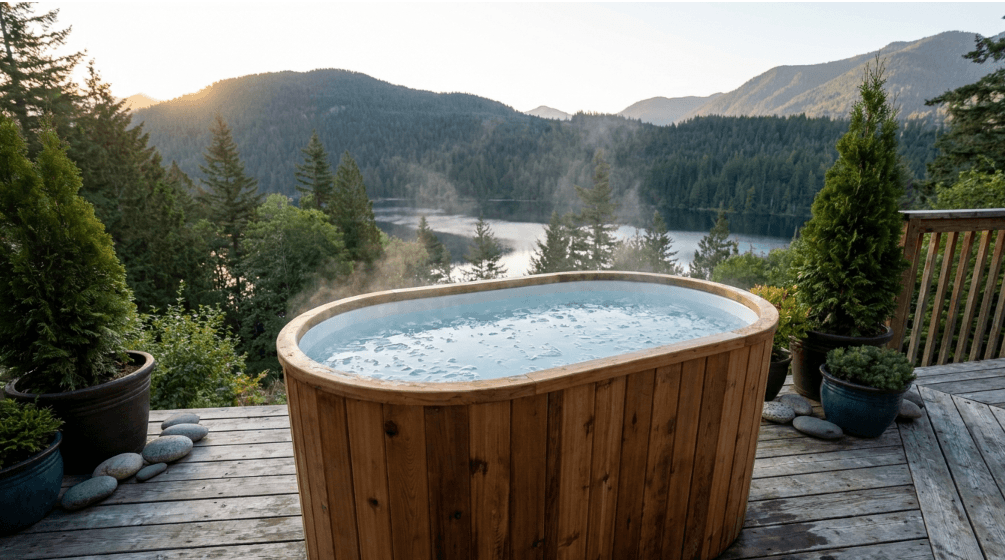
Placing a filled tub on an existing wood deck is the riskiest of the common shortcuts, since most residential decks are built to a general-use load rating that assumes weight spread across the whole surface, not concentrated in one roughly three-foot footprint. A deck built or reinforced specifically with that kind of point load in mind, confirmed by whoever built it or a structural inspection, can work, but an unverified deck is not a place to guess. When in doubt, a ground-level gravel bed next to the deck is the safer, and often cheaper, choice over reinforcing an existing structure.
A gravel bed and a paver base both allow water to drain through the joints and settle away from the tub naturally, which matters for outdoor placement since splashing and occasional overflow need somewhere to go besides pooling against the tub’s base. A solid poured slab needs a slight intentional slope, built in during the pour, to send water away rather than let it collect. Skipping this detail on a poured pad is a common budget-project oversight that shows up later as standing water and, over time, degraded concrete or a slippery surface right where people are stepping in and out of cold water.
Gravel and paver bases are the most realistic DIY projects for someone without construction experience, since the tools involved, a tamper, a level, a screed board, are all rentable for well under fifty dollars for a weekend. A poured concrete pad is a harder DIY case to make on a budget, since a poor pour can crack or settle unevenly, and the cost of fixing a failed slab often exceeds what hiring it out correctly would have cost in the first place. For most budget-focused buyers, doing the gravel or paver work personally while hiring out anything involving poured concrete is the split that keeps both cost and risk in check.
What is the cheapest surface option for a cold plunge?
A compacted gravel bed, often under 250 dollars in materials for a small tub footprint as a weekend project.
Can I put a cold plunge directly on an existing wood deck?
Only if the deck was engineered for that concentrated point load. A filled tub can weigh close to a thousand pounds or more.
Do I need a permit to pour a concrete pad for a cold plunge?
It depends on size and local rules. Small pads often don’t require one, but checking with the local building department first is worth it.
Is a rubber tile surface good enough for a cold plunge?
Only over an already solid, level surface like concrete or pavers. Rubber tiles do not add load-bearing support on their own.
By Renee Castellano
