Newsletter Subscribe
Enter your email address below and subscribe to our newsletter
Enter your email address below and subscribe to our newsletter

 ByJohn A
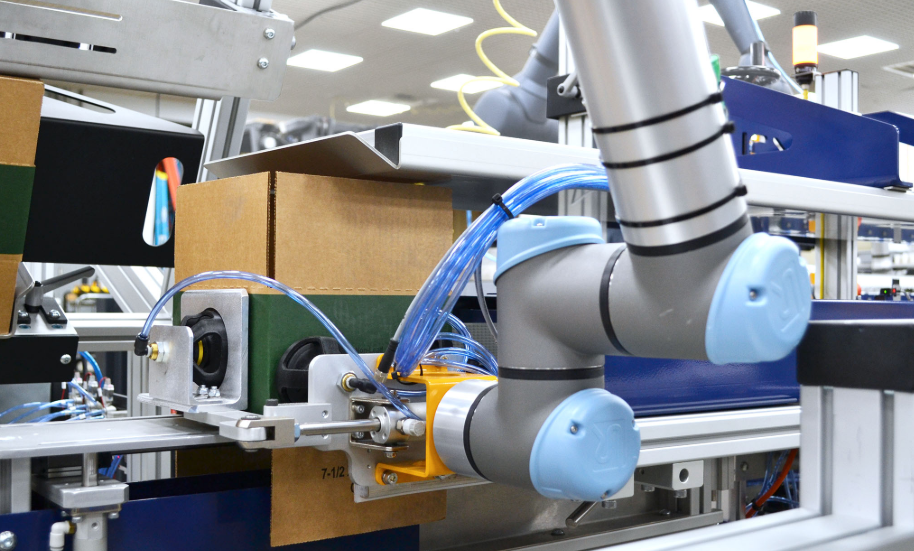
Packaging infrastructure is one of the most important yet often overlooked parts of modern industrial operations. While businesses usually focus on manufacturing, product development, and distribution strategies, the packaging stage plays a major role in ensuring products move efficiently through supply chains. As industries continue increasing production volumes and responding to faster delivery expectations, traditional packaging approaches are being replaced by smarter solutions designed for consistency, speed, and reliability. Among these developments, the case erector has become an important technology that is quietly transforming how businesses approach carton preparation and packaging operations.
Modern supply chains require more than basic packaging processes. Companies need systems that can support continuous production, reduce operational interruptions, and maintain consistent packaging standards across large volumes. Preparing cartons manually may create challenges when businesses experience growth, especially when accuracy and speed become essential.
The evolution of automated carton preparation reflects a broader movement toward intelligent manufacturing. Businesses are investing in technologies that improve workflow organization, strengthen operational control, and create packaging systems capable of supporting future industrial demands.
Carton preparation is a fundamental step in the packaging process.
Before products can be filled, sealed, and transported, boxes must be properly formed and prepared. Any delays or inconsistencies at this stage can affect the entire packaging workflow.
A reliable carton preparation process helps businesses maintain smoother operations and reduce unnecessary production challenges.
Despite its importance, carton forming has traditionally received less attention compared to other manufacturing activities. However, growing supply chain demands are changing how companies view this stage of packaging.
Supply chains today operate at a much faster pace than before.
Businesses must manage higher order volumes, shorter delivery timelines, and increasing customer expectations. These challenges require packaging operations that can keep up without sacrificing quality.
Efficient carton preparation helps prevent delays and allows products to move through distribution networks more effectively.
As companies continue expanding, automated solutions are becoming increasingly valuable for maintaining operational performance.
Manual carton assembly has supported many businesses for years, especially smaller operations.
However, as production requirements increase, manual processes can become difficult to manage. Labor availability, inconsistent box formation, and slower processing speeds may create limitations.
Automation helps businesses overcome these challenges by introducing more structured and reliable packaging workflows.
This transition allows companies to improve efficiency while making better use of their workforce.
Large-scale manufacturing requires packaging systems capable of handling continuous operations.
Industries such as food production, consumer goods, electronics, pharmaceuticals, and logistics often process thousands of products daily. Maintaining packaging consistency becomes essential in these environments.
Automated carton preparation supports high-volume operations by improving speed and reducing process variations.
This reliability helps businesses maintain stronger supply chain performance.
Consistency is a key factor in professional packaging.
Incorrectly formed cartons can create problems during filling, sealing, storage, and transportation. These issues may increase product damage risks and create additional handling requirements.
Reliable carton preparation improves the overall quality of packaging operations.
Businesses benefit from stronger control over their processes and improved confidence in product handling.
Efficient packaging depends on coordination between different stages.
When carton preparation, filling, sealing, and shipping processes work together smoothly, businesses can achieve better operational performance.
Automated systems contribute to this organization by creating predictable workflows that reduce unnecessary interruptions.
A well-structured packaging process supports better planning and resource management.
The expansion of online commerce has increased pressure on packaging operations.
Companies handling large numbers of customer orders need systems that can support fast and reliable fulfillment.
Carton preparation technology helps businesses manage increased demand while maintaining professional packaging standards.
As e-commerce continues growing, efficient packaging infrastructure will become even more important.
Packaging is becoming increasingly connected with modern manufacturing technologies.
Smart factories are integrating automation, digital monitoring, and intelligent systems to improve operational visibility and efficiency.
Carton preparation solutions are becoming part of this transformation by supporting more automated and organized packaging environments.
Future packaging operations will focus on flexibility, efficiency, and the ability to adapt quickly to changing requirements.
Every packaging operation faces challenges related to speed, labor, and consistency.
Technology helps businesses address these issues by creating more reliable processes and reducing dependency on repetitive manual activities.
Improved packaging systems allow companies to focus on productivity while maintaining quality standards.
This creates stronger foundations for long-term operational success.
The future of packaging will depend on smarter systems capable of supporting evolving industrial needs.
Businesses will continue searching for solutions that improve efficiency, reduce waste, and provide greater control over packaging operations.
Companies investing in advanced technologies today will be better positioned to handle future market demands.
Packaging infrastructure will continue becoming a more strategic part of overall business performance.
Packaging infrastructure forms the foundation of efficient product movement across modern supply chains. As businesses face increasing production demands and changing customer expectations, reliable carton preparation has become more important than ever. Automation is helping companies improve consistency, reduce operational challenges, and create packaging systems that support long-term growth.
The growing adoption of the case erector demonstrates how a previously overlooked stage of packaging is becoming a key part of modern industrial development. By improving carton preparation, supporting automated workflows, and strengthening supply chain efficiency, this technology is helping businesses build more reliable and future-ready packaging operations.